
In 1952 in „foggy Albion" (Great Britain), Colin Chapman founded one of the most remarkable car brands: Lotus. The name Chapman chose gave the brand a sense of mystery and elegance from the very beginning. Although there is no official version, the most popular theory says the name is connected to his wife, Hazel Williams, whose nickname was „Lotus Blossom." - From a marketing perspective, this choice was genius: the name „Lotus" symbolically associated the brand with lightness. While other car manufacturers were increasing engine size to get more power, Chapman chose a radically different marketing path. His philosophy was based on one simple idea: „Efficiency through lightness." Chapman's famous phrase, „Simplify, then add lightness," became not just an engineering principle but the main promise of the Lotus brand.
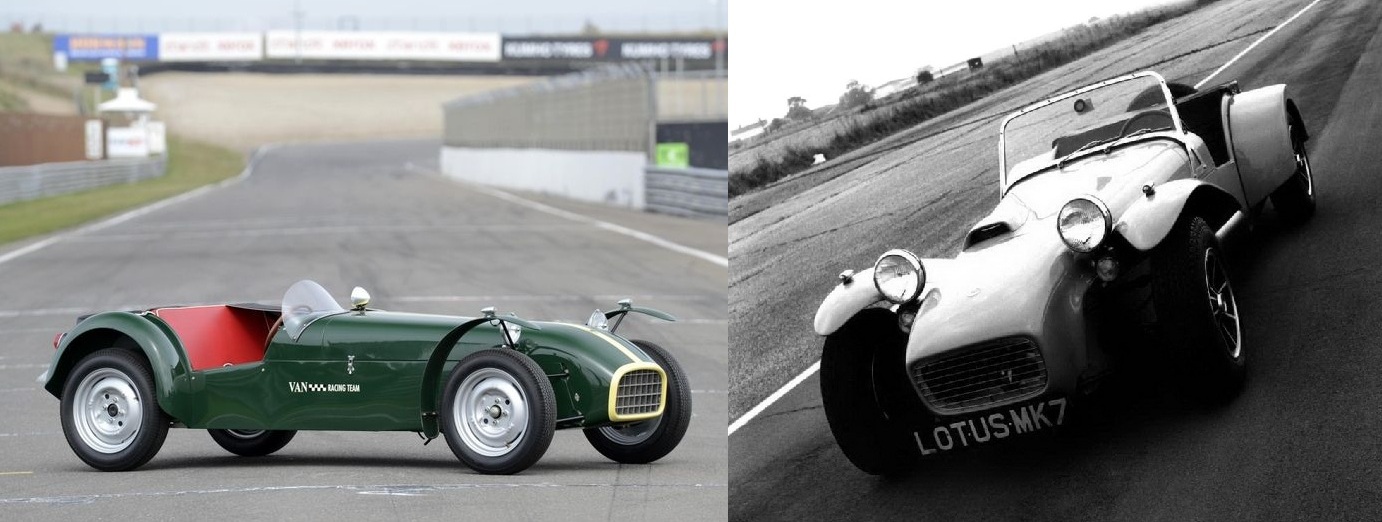
The company's first production cars, including the Mark VI and Lotus Seven, had minimalist designs. They were often sold as „Kit cars," meaning you could assemble them in your own garage like Lego. Small weight and good handling were always more important than comfort. This philosophy reached perfection in the 1960s with the Lotus Elan.
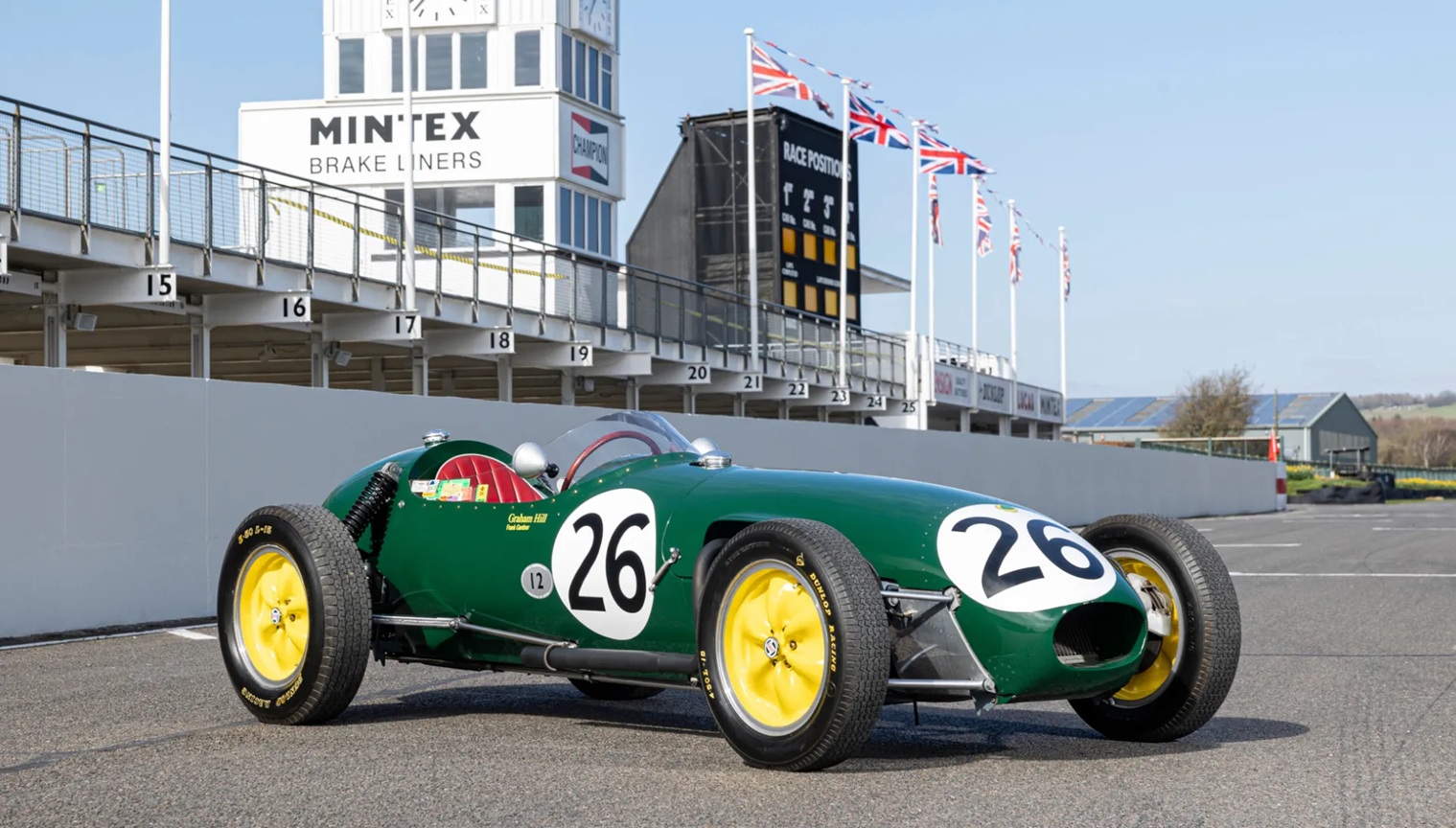
Lotus appeared in Formula 1 in 1958 and changed the sport completely. The team introduced new ideas, such as the monocoque chassis and advanced aerodynamics. In the 60s and 70s, Lotus won seven Constructors' and six Drivers' championships. Legendary drivers like Jim Clark and Emerson Fittipaldi raced for Lotus, turning the brand into a legend.
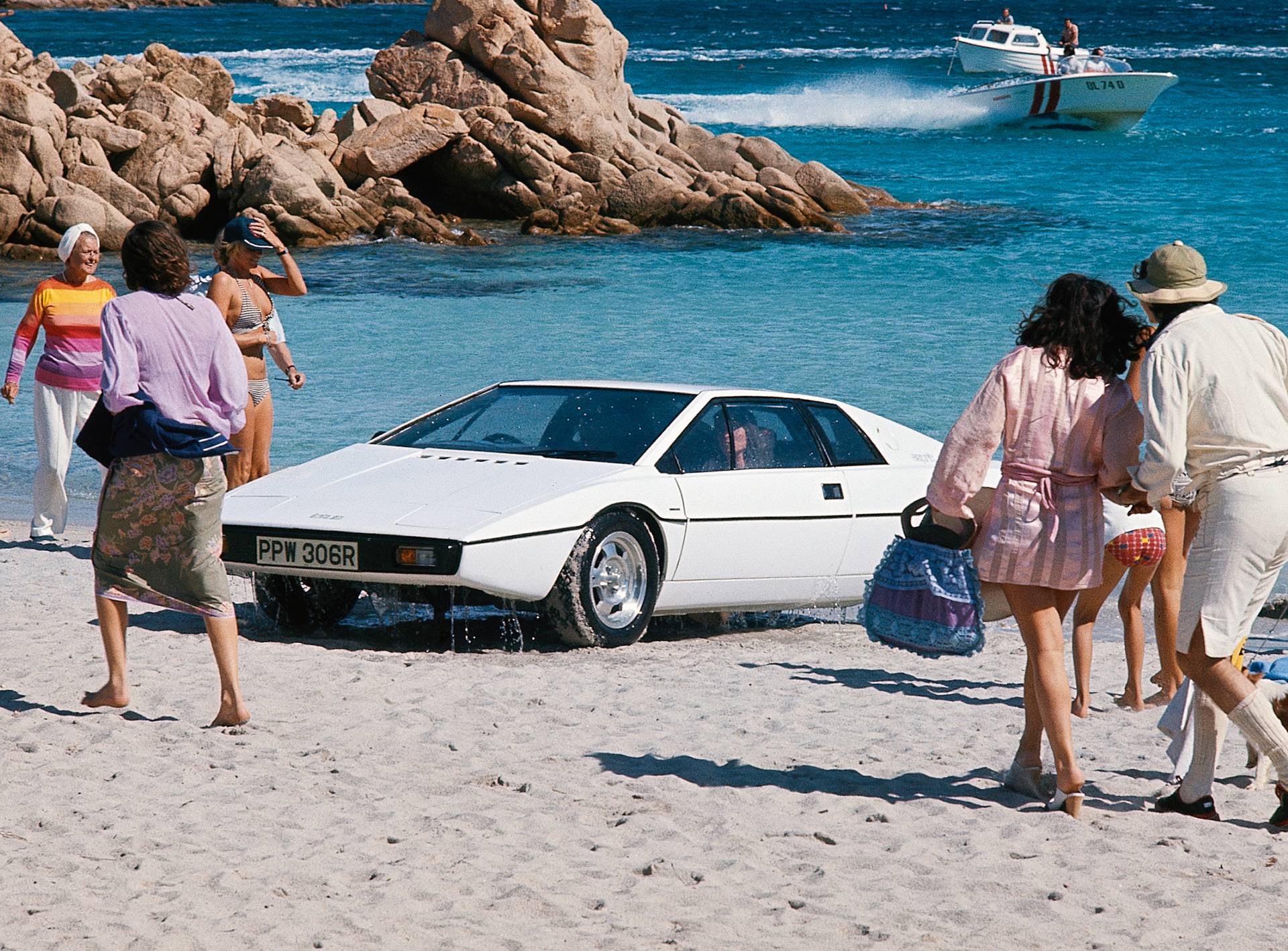
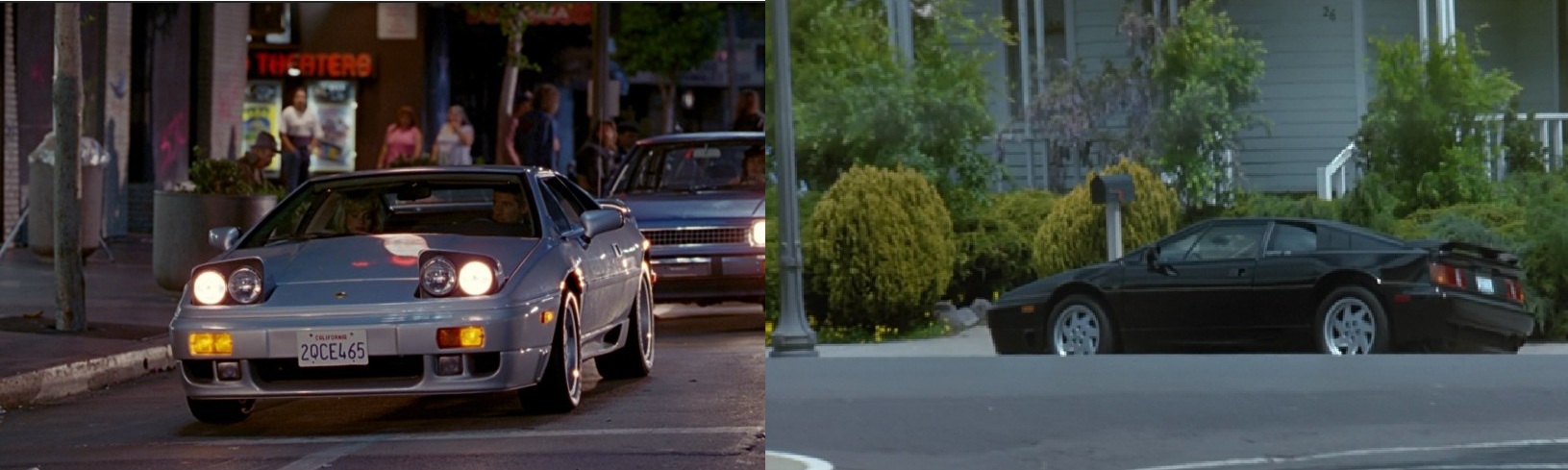
Esprit: Style, Speed, and the Big Screen - In 1976, Lotus joined the league of supercars with the Lotus Esprit, designed by the Italian designer Giorgetto Giugiaro. With its sharp, wedge-shaped design and mid-engine layout, the Esprit became the most recognizable Lotus road car. However, the brand reached its peak of popularity in 1977 through cinema. We saw the Esprit Series II in the 10th James Bond film, The Spy Who Loved Me, where the car suddenly transformed into a submarine.
Later, appearances in movies like Pretty Woman and Basic Instinct confirmed the Esprit's image as a fashionable and prestigious car. On the road, it showed impressive handling and speed for its time, but owning it was a challenge. Problems with reliability and inconsistent build quality became part of its reputation; for example, the gearbox often broke. Despite this, the Esprit remains one of the most symbolic British sports cars of the late 20th century.
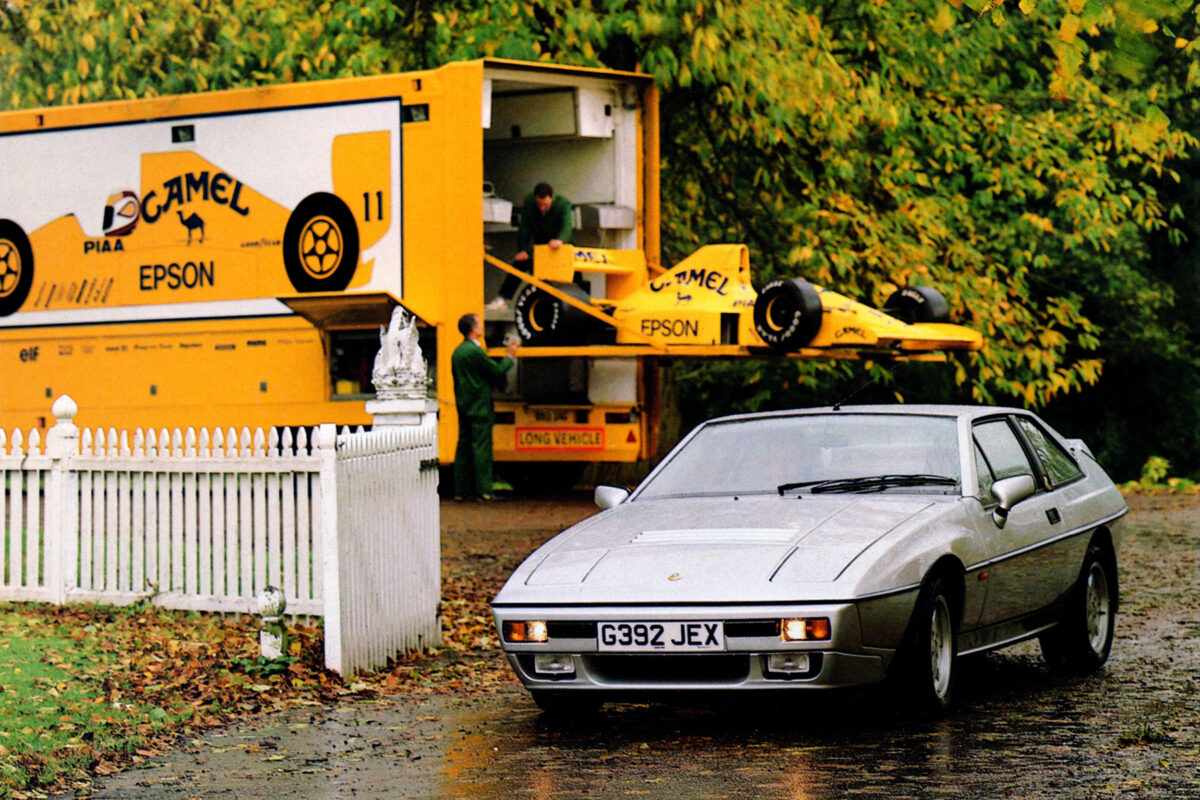
Crisis and Ways to Survive - By 1980, production dropped drastically from 1,200 units per year to only 383. To survive, Chapman signed an agreement with Toyota. Lotus helped develop the Toyota Supra (Mk2), and in return, they received access to Toyota parts for their new model, the Lotus Excel. - The problems did not end there. Lotus was involved in the DeLorean project, which turned into a major financial scandal involving the waste of British government subsidies. Soon after, in 1982, Colin Chapman died of a heart attack at age 54. At that exact time, tax inspectors were investigating the company. At the trial, the judge stated that if Chapman were alive, he would have faced at least 10 years in prison. In 1983, David Wickins (founder of BCA) saved the company from bankruptcy by bringing in new investors and completely turning the financial situation around.
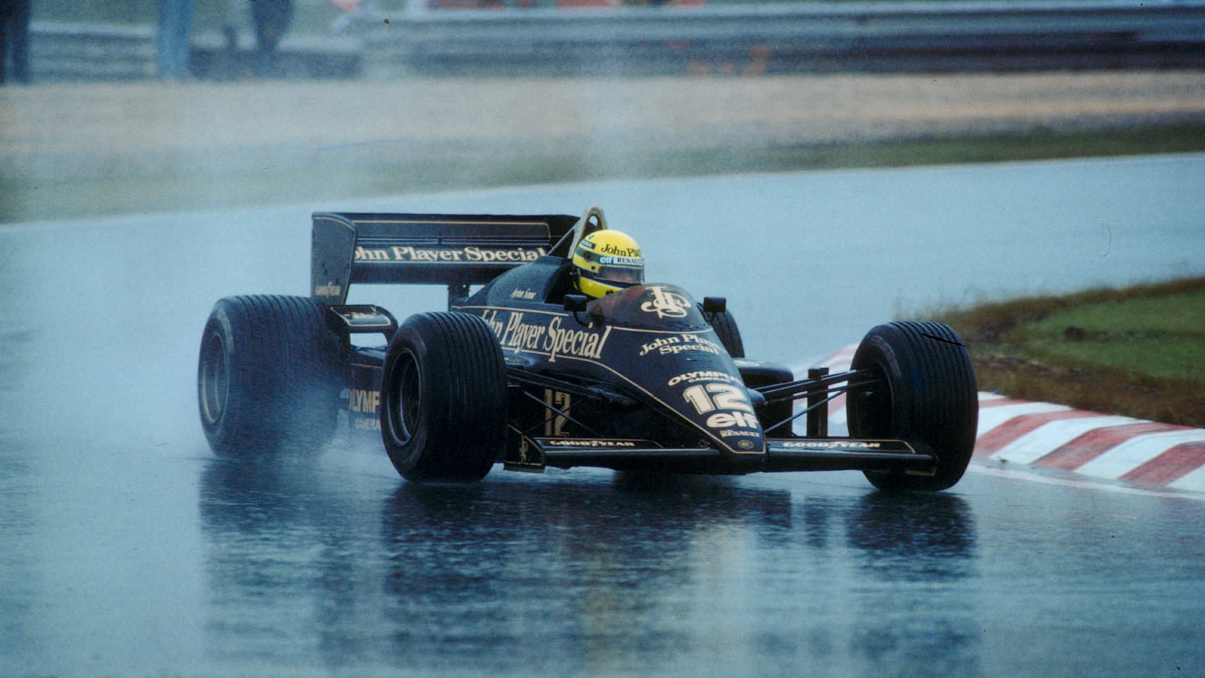
Autosport and the Senna Era - In the history of Formula 1, there are few connections as iconic as the collaboration between Team Lotus and Ayrton Senna from 1985 to 1987. This was an era when British engineering and Brazilian talent shocked the world. Senna proved in his first season that he was no ordinary driver. His first victory in Estoril, in heavy rain, is still considered a masterpiece of driving. The black and gold Lotus 97T was an unbeatable machine in Senna's hands. In three years, they achieved 6 wins and 22 pole positions. Senna brought back the old glory to Lotus, and the team gave him the platform to show his genius to the world.
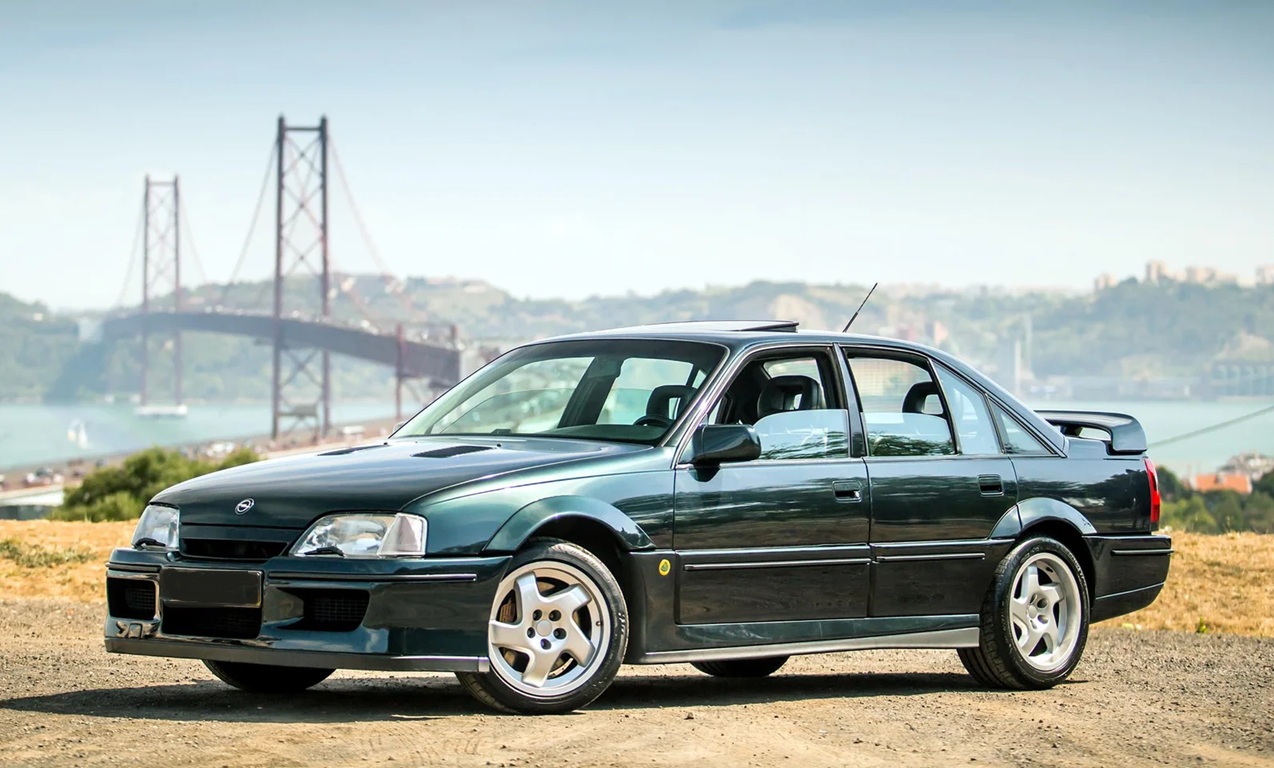
Lotus Omega: A Different Kind of Legend - In the early 90s, Lotus created one of the most unexpected cars in history: the Lotus Omega (known as the Lotus Carlton in the UK). Practically, the British threw down the gauntlet and challenged the German auto industry to a duel. The Lotus Omega appeared at a time when the world of super-sedans was ruled by Germans with models like the BMW E34 M5 and the Mercedes-Benz W124 500E (built with Porsche). 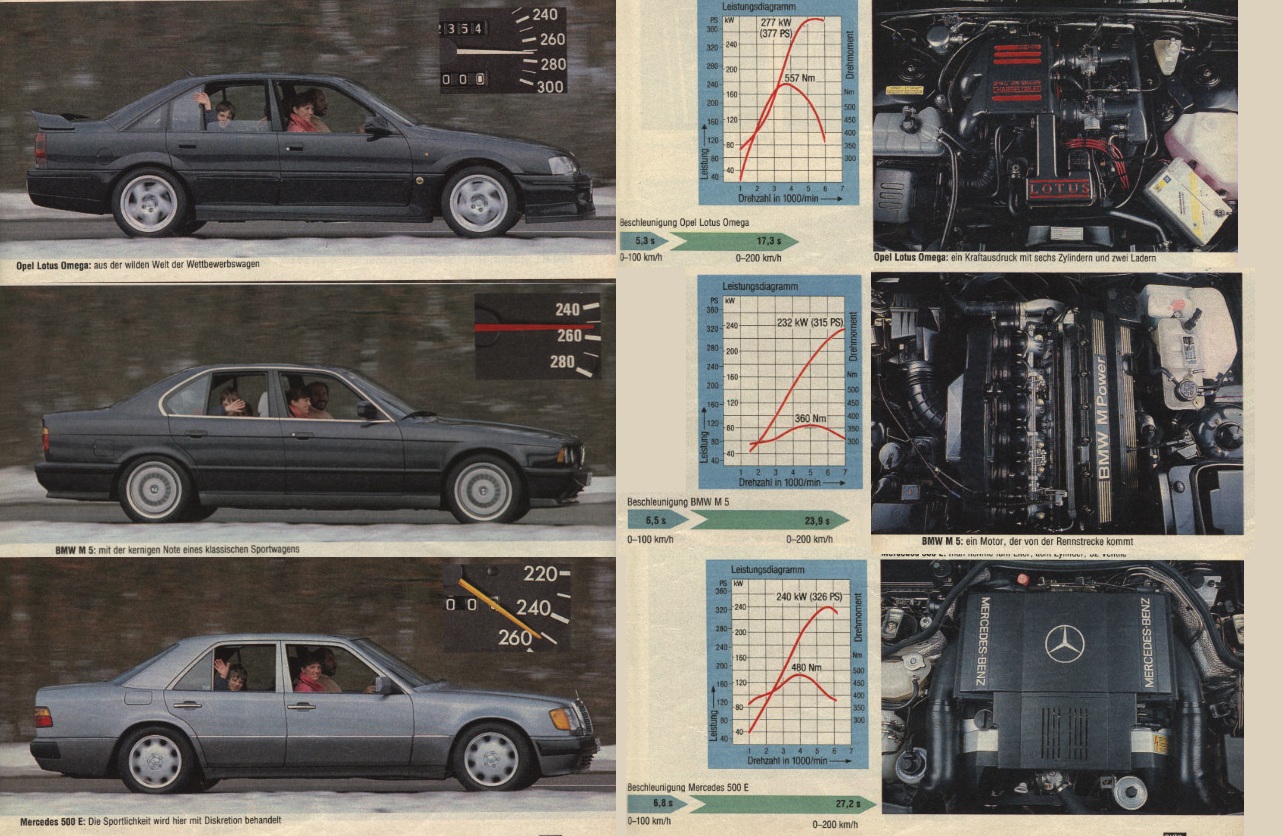
The market prices at the time were:
- BMW E34 M5 – $60,000 (98,000 German Marks)
- Lotus Omega - $80,000 (125,000 German Marks)
- Mercedes-Benz W124 500E - $88,000 (135,000 German Marks)
As you can see, the Lotus Omega was much more expensive than its direct competitor, the BMW M5. It was almost in the same price category as the Mercedes 500E, which was an incredible ambition for a car based on an Opel. Potential buyers asked: "Why should I pay 25,000 Marks more for a Lotus when I can buy an M5?" The answer was simple: Lotus offered what the Germans didn't dare to a top speed of 280+ km/h and a wild character.
The Lotus Omega was equipped with a 3.6-liter twin-turbo straight-six engine (C36GET) and a 6-speed gearbox from the Corvette ZR-1. It produced 377 horsepower and could reach 100 km/h in just 5.1 seconds. Externally, it looked modest, but it was devastatingly fast. The car soon became famous even outside car enthusiast circles. In the 90s, the media linked the Lotus Omega to organized crime and high-speed chases, giving it a mythical status. The police openly criticized it, claiming it was almost impossible to catch on the highways.
Elise: Saving the Brand - By the mid-1990s, Lotus faced financial instability again. The answer was the Lotus Elise, released in 1996. Built on a lightweight aluminum chassis, the Elise brought driving back to its basic roots. It became the most successful road car for Lotus, restoring trust in the brand and leading to the Exige and Evora. It was praised for its handling and driver involvement, though comfort remained secondary.

Modern Lotus Between Tradition and Change - In the 21st century, Lotus moved from "survival mode" to a full reincarnation. After decades of financial instability, the brand's strategy focused on protecting its core identity while expanding its audience. With new owners and investment, Lotus repositioned itself from a small sports car maker to a global brand with high ambitions. Lotus was never the most comfortable or reliable brand, but it always offered something rare a philosophy that helped the brand survive and win even during the hardest crises.